
Planting notes
- Chicago averages a January low of 18.8 degrees and about 38 inches of snow a year, with a median last spring freeze around April 16, according to NOAA normals.
- Little bluestem has a dense root system that may reach 5 to 8 feet deep, Illinois Extension says.
- Prairie plants are best planted in spring; late fall is the best time to sow prairie seed directly.
The Midwest was largely prairie and woodland edge before it was farmland and suburbs, and the plants that evolved there are still some of the best for home landscapes. They handle the cold, the heat and the swings between drought and downpour that define the region.
The climate in numbers
NOAA’s 1991-2020 normals for Chicago O’Hare:
| Measure | Chicago (NOAA normals) |
|---|---|
| Annual precipitation | 37.86 inches |
| Annual snowfall | 38.4 inches |
| Average January low | 18.8°F |
| Average July high | 84.5°F |
| Nights at or below freezing | about 121 a year |
| Median last spring freeze | around April 16 |
| Median first fall freeze | around October 28 |
| Typical freeze-free season | about 193 days |
Rain peaks in late spring and summer, around 4.5 inches in May, often in heavy thunderstorms. That pattern makes runoff and drainage a key part of the plan.
Why prairie plants work
University of Illinois Extension explains that native prairie plants evolved with the region’s climate, soils and pathogens over thousands of years. In the wild they depend on rainfall alone, and their large root systems either store water or grow deep, which protects them in dry spells. Extension’s conclusion: a lot of supplemental watering is neither necessary nor desirable. Nobody fertilizes a prairie either; fertilized prairie plants may grow too tall and flop.
Some favorites recommended by Illinois Extension:
| Plant | Notes from Illinois Extension |
|---|---|
| Little bluestem | Bluish stems turning orange to russet in fall; 2 to 4 feet tall; roots may reach 5 to 8 feet deep |
| Prairie dropseed | Clump-forming, fountain-like grass; tolerates a wide range of soils, including clay |
| Purple prairie clover | Slender, up to 2 feet; purple thimble-like flowers in June and July |
| Pale purple coneflower | Wispier, paler relative of purple coneflower |
| Butterfly milkweed | Bright orange flowers; critical for monarch butterflies |
| Wild bergamot | Pale lavender flowers; a favorite of bees |
| Switch grass | One of the prairie grasses for home yards |
How to plant them
- Choose a site with full sun and well-drained soil.
- Plant in spring; late fall is the best time to sow prairie seed directly.
- Buy from reputable local nurseries or catalogs; local stock is usually adapted to your area.
- Never dig plants from the wild.
- Pay attention to botanical names. Illinois Extension warns that many plants sold under prairie common names are hybrids that are not really prairie plants.
- Water while they establish, then mostly leave them alone.
Tip: You do not need an acre. Illinois Extension notes that a few prairie plants can be worked into an ordinary home garden bed.
Plant for pollinators and late color
Illinois Extension points out that many prairie natives feed pollinators: butterfly milkweed is critical to monarchs, wild bergamot is a favorite of bees, and smooth blue aster and native goldenrods bloom in late summer, when nectar is scarce, supporting many butterflies. Combining early, midsummer and late bloomers in one bed keeps it useful to wildlife and attractive from June to frost. Leave seed heads and stems standing over winter; little bluestem’s russet stems and fluffy seed heads add color and structure in snow, and Illinois Extension notes that prairie plants provide habitat for birds.
Rain gardens
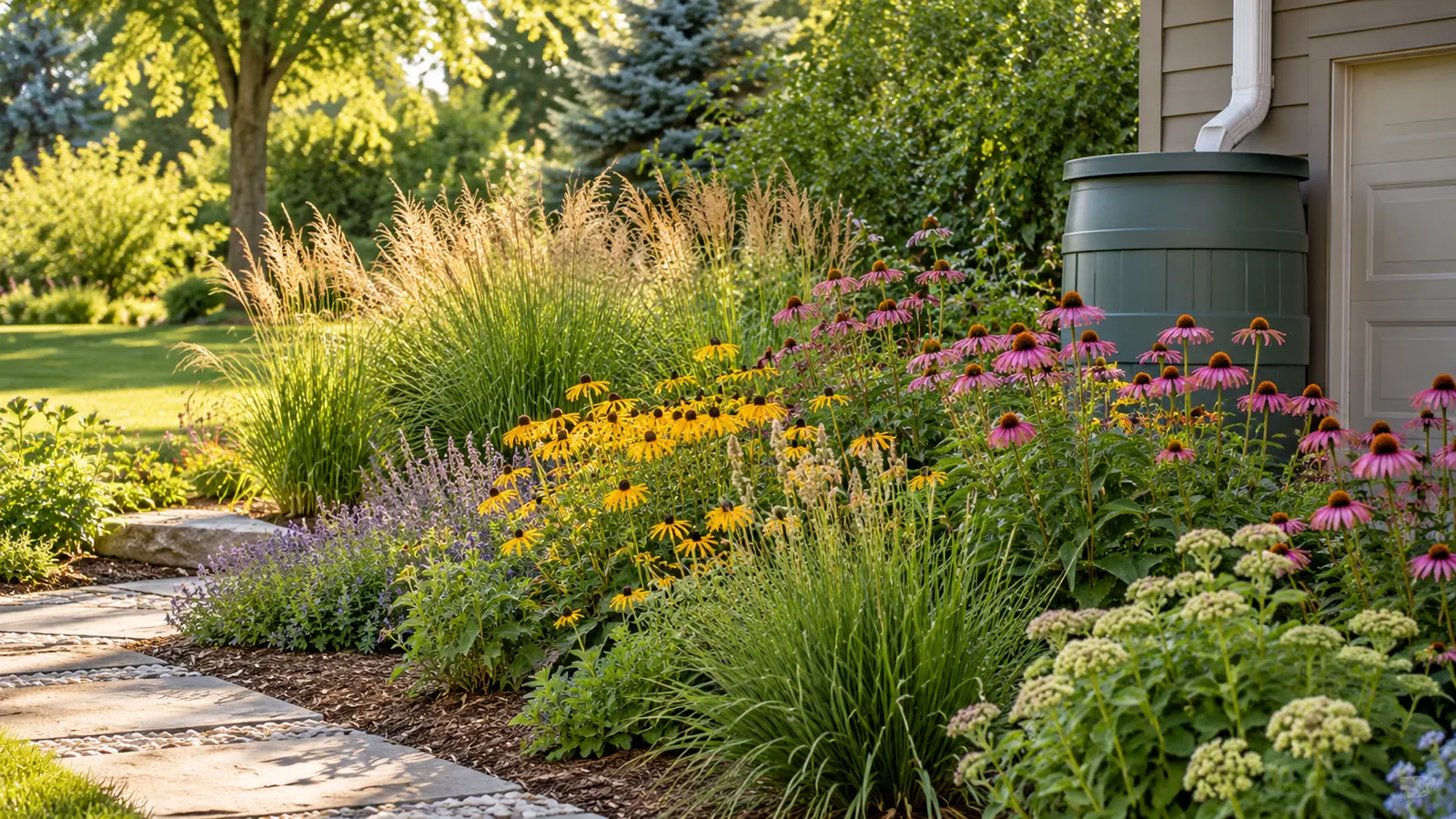
Midwestern storms send a lot of water off roofs and driveways. EPA’s Soak Up the Rain program describes a rain garden as a shallow depression planted with grasses and flowering perennials that collects runoff and lets it soak in. EPA WaterSense features a Michigan front yard with a rain garden of native plants fed by stormwater diverted from the street, with turf left for children to play. Plant the wetter bottom with species that tolerate standing water for a day or two and the drier rim with tougher prairie plants, and check for buried utilities before digging.
Wind and winter
Open Midwestern sites benefit from windbreaks. Purdue Extension recommends a windbreak of at least two rows of conifers plus rows of tall deciduous trees, tall shrubs and short shrubs, placed perpendicular to the prevailing winter wind at a distance of 2 to 5 times the windbreak’s height from the area to protect. On smaller lots, a row of evergreens on the north and west does part of the job. See Landscaping for Energy Savings: Shade Trees and Windbreaks.
A sample plan
| Area | Ideas |
|---|---|
| Front | Smaller lawn, prairie border of grasses and coneflowers along the walk |
| Downspout | Rain garden with deep-rooted natives |
| West and north lines | Evergreen screen or windbreak |
| South side | Deciduous shade tree to let winter sun in |
| Back yard | Lawn for play, pollinator bed with milkweed and bergamot |
The bottom line
Plant the prairie: deep-rooted natives in full sun handle Midwestern drought, cold and storms with little help. Add a rain garden for runoff, evergreens against winter wind and deciduous shade on the south. For the drier, windier country to the west, see Landscaping on the Great Plains: Wind, Drought and Windbreaks.