
Planting notes
- Phoenix averages 7.22 inches of rain a year and about 173 days at or above 90 degrees, according to NOAA’s 1991-2020 normals.
- University of Arizona Extension says drought-tolerant plants need regular irrigation for the first couple of years, then reduced watering so they can show their drought tolerance.
- Drip systems often wet only a small area near the original root ball, the University of Arizona notes, which limits root spread.
A desert yard can be lush, but only if it is planned around water. Low rainfall, extreme heat and intense sun mean that plant choice and irrigation decide almost everything. The good news is that a well-planned desert landscape is beautiful, comfortable and cheap to run.
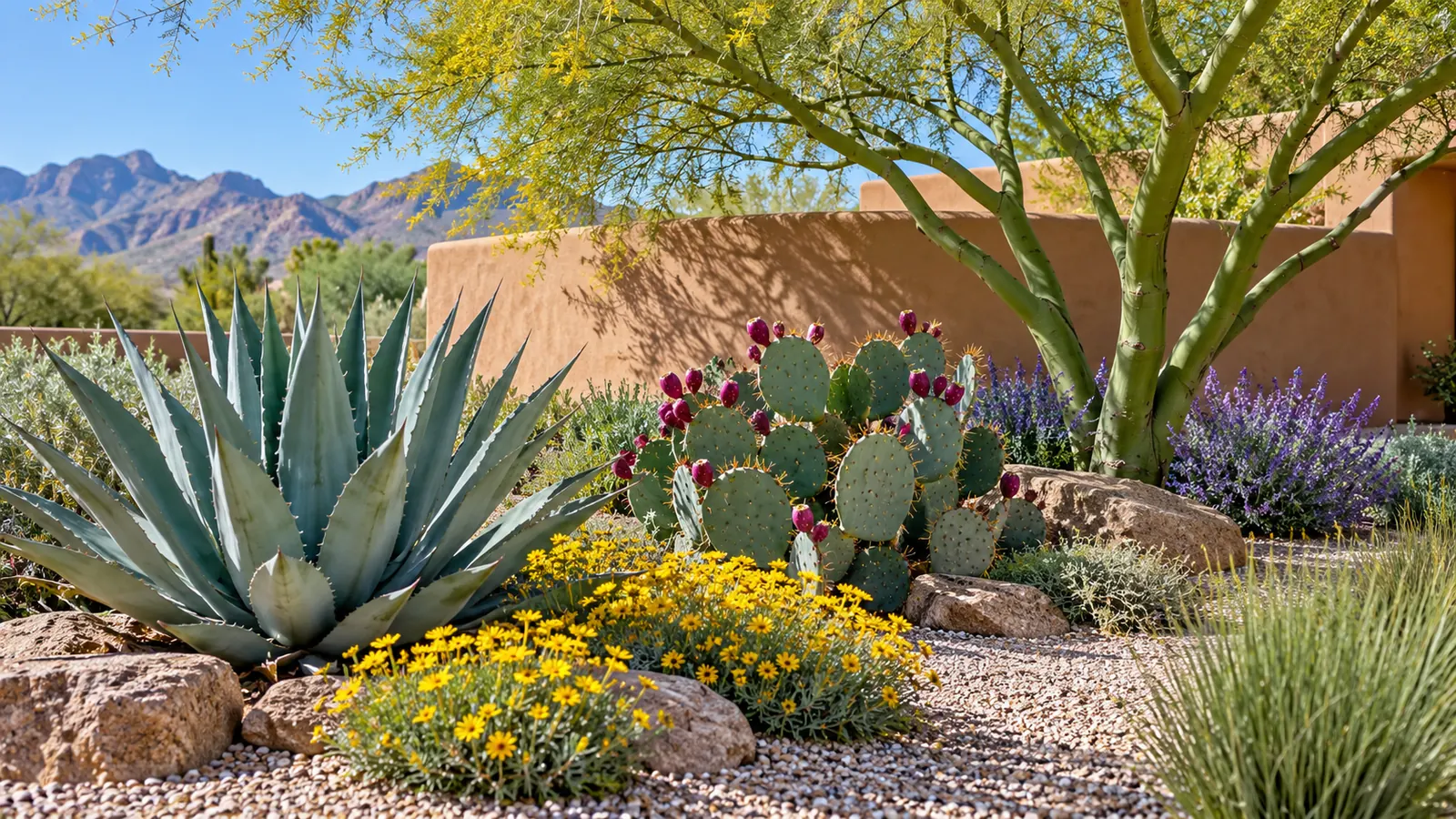
The climate in numbers
NOAA’s 1991-2020 normals for Phoenix Sky Harbor:
| Measure | Phoenix (NOAA normals) |
|---|---|
| Annual precipitation | 7.22 inches |
| Average January low | 46.0°F |
| Average July high | 106.5°F |
| Days at or above 90°F | about 173 a year |
| Wettest months | July and August, about 0.9 inches each, plus winter rains |
| Driest month | June, 0.02 inches |
Rain comes in two seasons: winter storms and summer monsoon thunderstorms. Between them, especially in May and June, it barely rains at all.
Plan for drought, not around it
University of Arizona Cooperative Extension makes the point plainly: drought conditions are familiar to Arizona residents, so rather than responding to drought, homeowners should plan for it. One way is xeriscape, landscaping that reduces or eliminates the need for supplemental irrigation.
EPA’s WaterSense program notes that residential outdoor water use across the country accounts for nearly 8 billion gallons a day, mainly for landscape irrigation, and that the average household uses more water outdoors than for showering and washing clothes combined.
Establish, then cut back
University of Arizona Extension gives three rules for drought-tolerant plants:
- Irrigate them regularly for the first couple of years to get them established.
- Water not only the original root ball but the surrounding native soil, so roots spread widely, anchor against wind and can use natural rain.
- After establishment, actually reduce the irrigation so the plants can express their drought tolerance.
It adds that drought-tolerant plants grown with little water may have fewer leaves, smaller flowers or slower growth than the same plant heavily watered, and that is normal.
Tip: Check your drip layout. University of Arizona notes that drip systems are usually designed to wet only a small area near the original root ball, which is where they fall short as plants grow. Add emitters or move them outward as the canopy spreads.
Do not overfeed or overprune
University of Arizona Extension advises resisting the urge to fertilize drought-tolerant ornamentals: fertilizing produces weaker wood and fast growth that needs pruning, and lush growth attracts animals and insects. It says drought-tolerant plants should never be sheared into shapes; with limited water they develop a natural form on their own. Pruning wounds take energy to heal and expose tissue to disease.
Hydrozones and mulch
EPA WaterSense recommends grouping plants with similar water needs into hydrozones, each on its own valve or schedule, with turf always separate from shrubs. In the desert that often means:
| Zone | Typical plants | Water |
|---|---|---|
| Oasis | A small lawn or patio planting near the house | Most water, smallest area |
| Transition | Drought-tolerant shrubs and perennials | Moderate during establishment, then little |
| Desert | Cacti, succulents, native trees and shrubs | Rain only once established |
Mulch helps in heat by reducing evaporation. EPA notes that inorganic mulches such as rock are an option, and that three to four inches of mulch suits most plants.
Shade is part of the plan
Building America research for the Department of Energy notes that roofs and pavement in the sun can reach 50 to 90 degrees Fahrenheit above air temperature. In a place with 173 days over 90 degrees, shading paving, walls and windows is essential. Plant low-water trees on the west and east sides and over the patio, and use shade structures where trees cannot go. See Landscaping for Energy Savings: Shade Trees and Windbreaks.
Native plants support wildlife
University of Arizona Extension notes that drought-tolerant native plants provide familiar habitat for native birds, reptiles, mammals and insects, while non-native drought-tolerant plants are less familiar to native wildlife. Mixing natives into the plan makes a desert yard livelier.
Check local rules and lists
Many desert cities and water utilities publish low-water plant lists, rebates and watering schedules. EPA WaterSense keeps a state-by-state list of regional plant guides, including New Mexico’s from the Albuquerque area water utility. Use local lists; the low desert and the high desert are very different.
A sample plan
| Area | Ideas |
|---|---|
| Front yard | Gravel and natives with a few accent succulents, no turf |
| West wall | Low-water shade tree, drip watered beyond the root ball |
| Patio | Shade structure or tree canopy, permeable surface |
| Near the door | Small oasis zone with higher-water plants |
| Roof runoff | Basin or rain garden to catch monsoon rain for nearby plants |
The bottom line
Choose drought-tolerant plants, water them well while they establish, then cut back; group plants by water need, mulch, and shade the hot surfaces. A desert landscape planned that way uses a fraction of the water of a lawn and stays cooler. For higher, colder country, see Landscaping in the Mountain West: Short Seasons and Wildfire Zones.