
Planting notes
- Atlanta averages about 50.4 inches of rain a year and 47 days at or above 90 degrees, according to NOAA’s 1991-2020 normals.
- Clemson Extension says azaleas grow best in acid soil with a pH of 4.5 to 6.0, well drained and rich in organic matter.
- A 2- to 3-inch layer of organic mulch such as pine straw is very important for azaleas, Clemson says.
The Southeast is a gardener’s paradise and a gardener’s test at the same time. Long growing seasons and abundant rain let plants grow fast, but heat, humidity, heavy clay or sandy soils and summer droughts between storms all shape what thrives.
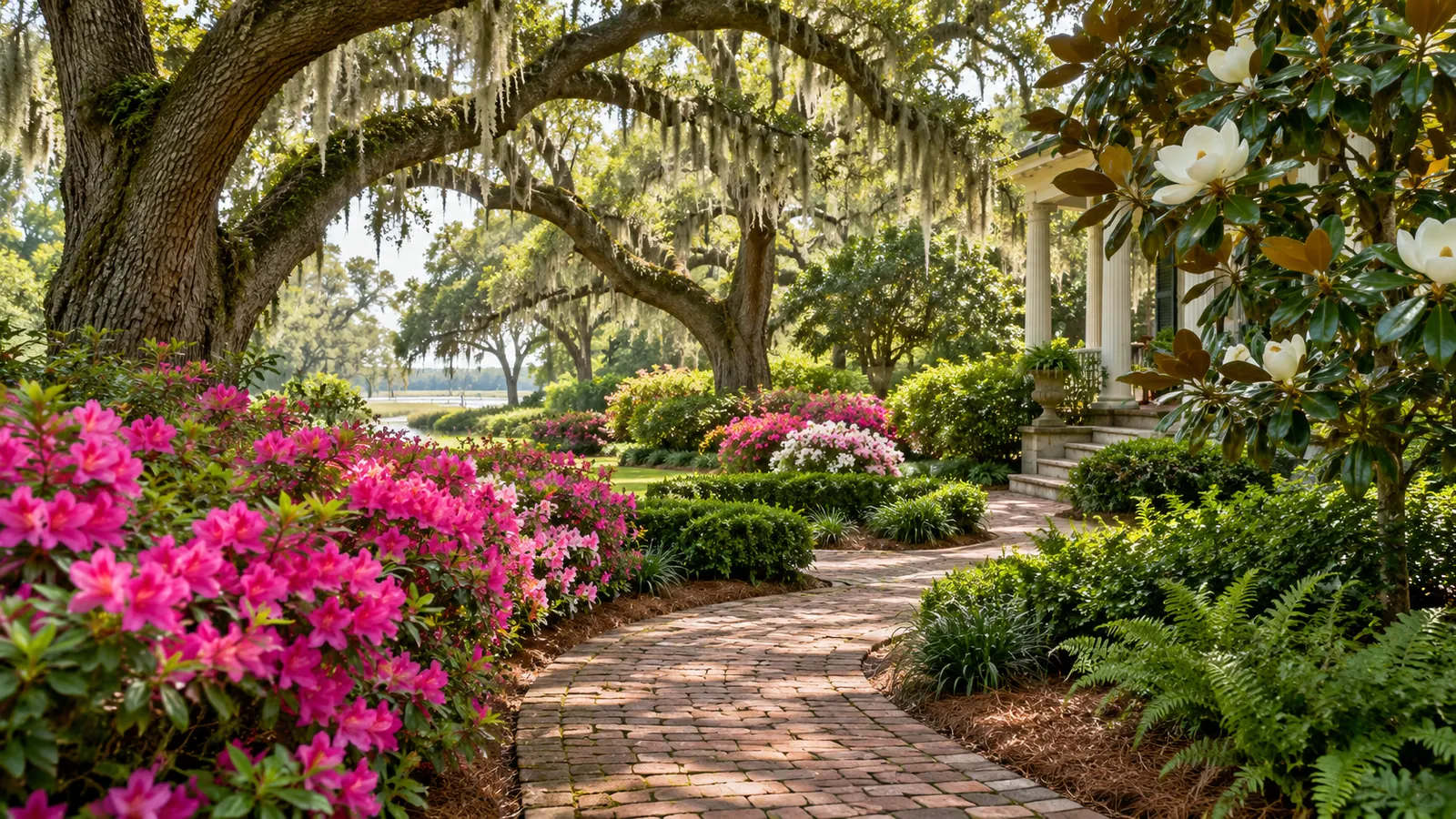
The climate in numbers
NOAA’s 1991-2020 climate normals for Atlanta’s Hartsfield airport:
| Measure | Atlanta (NOAA normals) |
|---|---|
| Annual precipitation | 50.43 inches |
| Annual snowfall | 2.2 inches |
| Average January low | 35.6°F |
| Average July high | 90.1°F |
| Days at or above 90°F | about 47 a year |
| Median last spring freeze | around March 15 |
| Median first fall freeze | around November 20 |
| Typical freeze-free season | about 252 days |
Rain is generous, between about 3.3 and 4.8 inches every month, but summer heat means plants can still dry out between storms.
Shade is the most valuable thing you can plant
With dozens of 90-degree days, shade pays twice: for comfort and for energy. Building America research summarized by the Department of Energy found that two identical houses in Alabama differed by 59 percent in July cooling, with the fully shaded one far ahead. Plant shade first on the east and west sides, where midsummer sun hits hardest, and shade the driveway and patio, which can run 50 to 90 degrees Fahrenheit hotter than the air in full sun. See Landscaping for Energy Savings: Shade Trees and Windbreaks.
Planting azaleas and other acid-lovers
Azaleas are the classic Southern shrub, and the way extension services describe growing them is a good model for many plants in the region. Clemson University’s Home and Garden Information Center says:
- Azaleas prefer cool, partly shaded sites, such as the filtered shade of pine trees; all prefer protection from long periods of hot full sun and drying winds.
- Under hardwoods with shallow roots, azaleas must compete for water and nutrients.
- They are shallow-rooted, easily damaged by too much soil moisture and grow best in acid soil, pH 4.5 to 6.0, that is well drained and rich in organic matter.
- In poorly drained spots, add composted pine bark over a large area and plant the root ball higher than the ground.
- A 2- to 3-inch layer of organic mulch, such as pine straw, composted pine bark or leaves, is very important.
University of Georgia Extension adds that azaleas do best with morning sun and afternoon protection; too much sun stresses them and invites pests such as the azalea lace bug, while too much shade reduces flowering.
Tip: Test the soil before planting acid-loving shrubs. Clemson recommends adjusting pH according to soil test results rather than by guesswork; see Test Your Soil Before You Plant: A Homeowner’s Guide.
Watering wisely
Clemson’s advice for azaleas applies to many shallow-rooted shrubs: check moisture by pulling back a little mulch near the base; if the top few inches are dry, water deeply, to at least 6 to 8 inches. Use soaker hoses or drip irrigation, since overhead watering can promote disease. In sandy soil in warm weather, new plantings may need watering twice a week in their first year.
EPA’s WaterSense program recommends grouping plants by water need in “hydrozones” and keeping turf separate from shrub beds, so each gets what it needs and no more.
Fertilize less than you think
Clemson notes that azaleas have low nutrient needs and that organic mulch often supplies enough as it breaks down; before fertilizing, have a specific reason. UGA adds that over-fertilizing can do more harm than good and that yellowing leaves are often a soil pH problem rather than a lack of fertilizer.
Pests and diseases follow stress
UGA Extension points out that most azalea problems in home landscapes trace back to site, soil and moisture. The azalea lace bug, which leaves foliage bleached or stippled, is the most common pest and is worst on plants in too much sun; spider mites and scale insects also show up on stressed plants. Root rot from poorly drained soil is the most serious disease and can kill a plant, while leaf gall and petal blight tend to appear in cool, wet weather. The fix is usually cultural: the right light, good drainage and steady moisture, then monitoring.
Lawns and the rest of the yard
WaterSense suggests putting turf only where it has a practical use and choosing a low-water turfgrass suited to your climate. Under large trees, a mulched bed of shade-tolerant shrubs and ground covers often does better than struggling grass.
A sample plan
| Area | Ideas |
|---|---|
| West side of the house | Large deciduous shade tree, kept a safe distance from the foundation |
| East side | Smaller trees and tall shrubs for morning shade |
| Under pines | Azaleas and other acid-loving shrubs in pine straw mulch |
| Front lawn | Small, low-water turf area |
| Drainage swale | Rain garden or moisture-loving native plants |
| Patio | Shaded by a tree or pergola; permeable paving |
The bottom line
In the Southeast, plan for shade first, plant shallow-rooted shrubs in well-drained, acid, mulched beds, water deeply but not often, and fertilize only when a soil test says to. For the Gulf Coast and Florida, where frost is rare and hurricanes are not, see Landscaping in Florida and on the Gulf Coast.